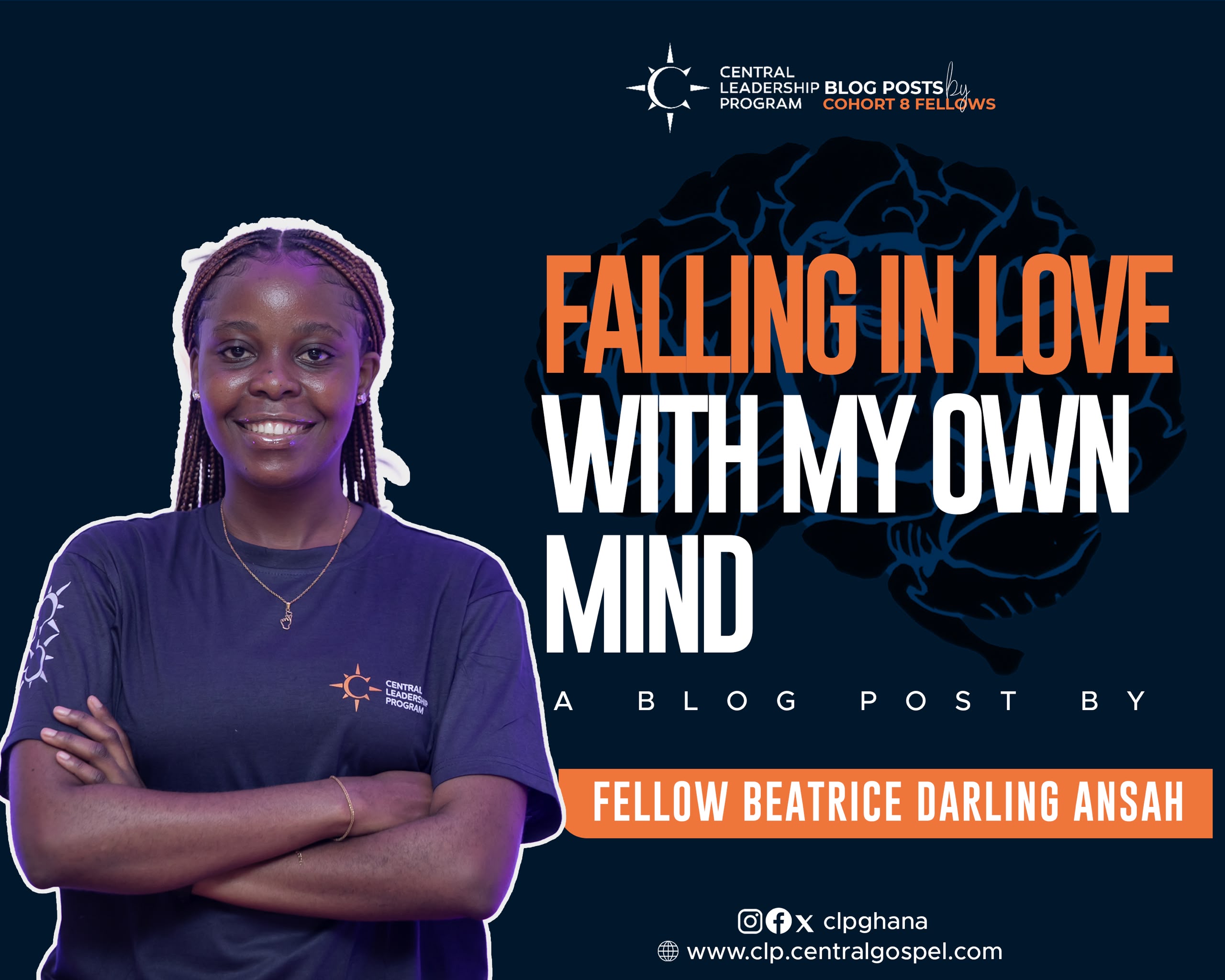
Thinking Is a Process, Not an Accident. A mental process of understanding a situation, analyzing information, solving problems, making decisions, generating options.
I didn't expect a simple question to shake me the way it did.
"Why are we here?"
Not why we're at this particular moment in life. Why are we here at all — as thinking beings, on this actual earth, right now. I sat with that question longer than I meant to, and the answer I kept landing on surprised me: we're here to fall in love with thinking.
I laughed a little inside the first time I heard it. Isn't thinking just... something we do? We don't fall in love with breathing. But the longer I turned the idea over, the more it unraveled something in me. Thinking isn't just background noise running while you go about your day. It's a craft. A skill. Something you can be terrible at or brilliant at — and most of us have never once stopped to ask which one we're doing.
That reframe alone changed something in me.
You Are What You Think
Here's the line that hasn't left me since: you are what you think.
Not what you say. Not even what you do first. What you think. Romans 12:2 tells us we're transformed by the renewing of our minds. Philippians 4:8 tells us to fix our thoughts on what is true, noble, and pure. Ephesians 4:23 calls us to be made new in the attitude of our minds. Colossians 3 pushes it even further — set your mind on things above. Think like Christ.
That's a high standard. But it's also freeing, once it sinks in: you can pretend to be someone you're not, perform, say all the right things — but your thought pattern will always show eventually. What's happening in your mind is what's actually steering your life, whether anyone else can see it or not. So the real question was never "how do I act better." It's how do I think better.
Thinking Is a Process, Not an Accident
History has mostly treated thinking as a given — something everybody just has, like eyesight, rather than something worth studying and sharpening. Only a handful of people, across all of history, actually paused long enough to ask what it means to think well. And when you look closely at great thinkers — including many from our own African history — they didn't just have information. They had a process.
Strip it down and thinking is really this: a mental process of understanding a situation, analyzing information, solving problems, making decisions, generating options. It starts with perceiving — really observing, using your senses to gather data, sorting what's important from what's just noise, what's urgent from what can wait. Then comes the sorting: what's actually at stake here, who's involved, what forces outside your control are at play, what am I actually trying to achieve?
And here's the picture that stuck with me most: thinking without action is like faith without works. It doesn't move anything. You can perceive, analyze, even feel deeply about something — but if it never becomes action, you never actually finished the thought. You just noticed it.
Thinking Is Not the Same as Talking
We confuse the two constantly. Someone who talks a lot isn't necessarily thinking deeply, and someone quiet isn't necessarily thinking nothing at all. Real thinking is self-reflective — it asks how your culture, your environment, your own history are shaping the way you're seeing something right now. It asks about consequence, about timing, about whether your values actually agree with the decision you're about to make.
There are even stages to how developed a thinker you are: unreflective, where thinking goes unchallenged. Beginning, where you start questioning. Practical. Then developed and advanced, where thinking becomes almost intuitive. I caught myself being brutally honest about where I currently sit on that scale — and that honesty stung a little. Growth usually does.
Critical thinking specifically means examining the information before deciding, questioning your own assumptions, refusing to accept something just because it's what you've always believed. As a leader — a word I'm still growing into — I've come to understand that thinking, at its core, is questioning. Not doubt for doubt's sake. Just refusing to accept things simply because they were handed to you.
Assumptions Aren't the Enemy — Until You Treat Them as Fact
This one hit differently. Assumptions and speculation aren't bad in themselves — when the true facts aren't available yet, they're actually necessary. You can't wait for perfect information before you move. The danger creeps in when we start treating our assumptions as facts and build entire decisions on top of them. So make the assumption if you have to. Just go and validate it before you let it be the final word.
Respecting Failure Instead of Fearing It
If there's one thing I wish every young person in Ghana could hear, it's this. Our biggest obstacle with failure was never failure itself — it's how we've been taught to understand it. From childhood, failure gets tangled up with ridicule, and that ridicule stigmatizes us so deeply we become afraid to even try. But failure deserves respect, not shame. Failure means you attempted something — and without the attempt, there was never going to be a success in the first place.
"Take the shot, you may miss. Don't take it, and you will surely miss."
I've sat with that line more times than I can count. Every time I've hesitated to raise my hand, speak up, or say yes to something bigger than I felt ready for, it's the line that has pushed me anyway.
Emotions Have a Place — Just Not the Driver's Seat
We're human, not robots, and our emotions make life beautiful. But the moment emotion grabs the wheel from reasoning, subjectivity blurs objectivity, and our decisions pay for it. The move that actually works: acknowledge the emotion, validate it, let yourself feel it fully — then excuse yourself to go think. Passion has its place. So does clarity. They're not enemies. They just need to take turns.
What I'm Carrying Forward
Thinking is invisible work. Nobody sees it happening, but it shapes absolutely everything that follows — our words, our decisions, our relationships, our faith walk. Psalm 139 reminds us we are fearfully and wonderfully made, and part of that design includes a mind built for real, disciplined thought. 2 Corinthians 10:5 tells us to take every thought captive, which means we actually have the authority to examine what's running through our own heads and decide what stays and what goes.
So here's my challenge — to you, and to myself: don't let your thinking run on autopilot. Pause before you react. Question the assumption before you build a decision on it. Respect the failure instead of hiding from it. Feel the emotion fully, then step aside and think clearly. Fall in love with the craft of thinking — because whether you notice it or not, it is already shaping the life you're building.
Written by Fellow Beatrice Darling Ansah