Reflection is only problematic when it becomes a destination rather than a tool for moving forward. Sometimes, we convince ourselves that because an explanation feels right, it must be true. Before we know it, reflection becomes overthinking, and we remain stuck in the past while believing we are working on ourselves.
Have you ever wondered why a driver has to look both forward and backward in order to arrive safely at a destination?
When I first reflected on introspection, I was more focused on the danger of looking backwards for too long. This is because, truly, we can replay situations, analyse our decisions, question our behaviour and create explanations for why things happened. Sometimes, we convince ourselves that because an explanation feels right, it must be true. Before we know it, reflection becomes overthinking, and we remain stuck in the past while believing we are working on ourselves.
But the question of the rear-view mirror made me reconsider this.
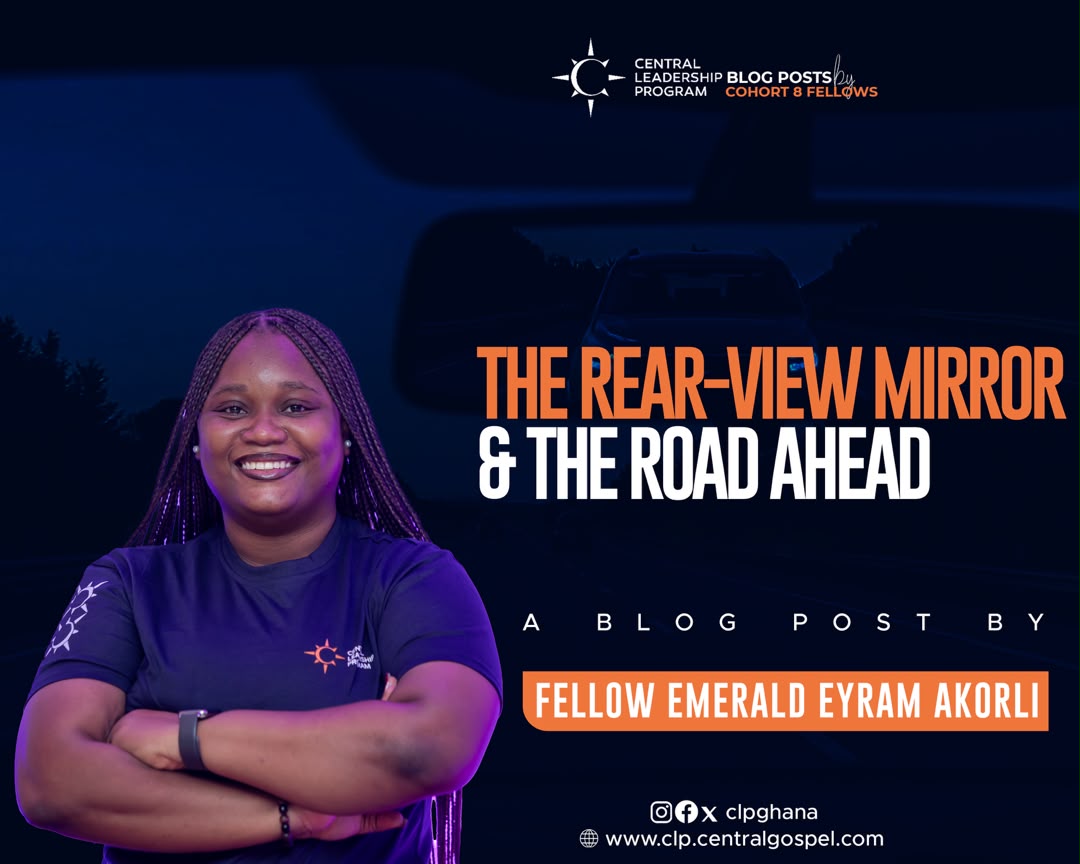
A driver needs to look backwards, but they do not drive by staring into the mirror. They glance at it to understand what is behind them, assess their surroundings and make better decisions about where they are going. Perhaps self-awareness works in much the same way.
Looking back is necessary. We need to examine our experiences, recognise our patterns, acknowledge our mistakes and understand how our biases and assumptions shape the way we see the world. Our biases, as I have come to learn over the last couple of months, account for a large portion of our perception of issues. In Understanding Self, we explored how much of what we consider “normal” is shaped by the homes we grew up in, how we were raised, and the experiences that formed us. I realised that what feels completely ordinary to me may be uncomfortable or unfamiliar to someone else.
This matters even more in leadership because we do not lead people who have all been shaped in the same way we have. If I am not aware of my own biases, I may mistaken my personal preferences for objective standards. I may judge someone else's behaviour simply because it does not fit my understanding of what is right or acceptable. Reflection therefore requires more than looking at what happened. It requires being willing to question the lens through which I am looking.
Avoid making Reflection a Destination
In coming to terms with this, I have realised that reflection is only problematic when it becomes a destination rather than a tool for moving forward.
This is what makes the distinction between “why” and “what” questions particularly meaningful to me. Asking why can sometimes help us understand a situation, but it can also keep us searching endlessly for explanations. Why did I do that? Why did this happen? Why did they respond that way? We can ask these questions repeatedly and still not know what to do differently.
“What” questions shift the focus from the problem to the actions that can be taken to resolve it.
What happened? What did I contribute? What pattern am I noticing? What can I do differently next time? What needs to change?
There is something uncomfortable about these questions because they require action. It is much easier to analyse a problem than to accept responsibility for changing our response to it. Yet, perhaps growth is not always about finding the perfect explanation for who we are. Sometimes it is about becoming honest enough to recognise our patterns and disciplined enough to do something about them.
I have even started to notice this in something as ordinary as my relationship with social media. I can spend too much time scrolling, realise how much time I have wasted and become self-critical about it. But asking myself why I did it can easily become another cycle of guilt. Asking what I can do differently produces a more useful response. I can compartmentalise my activities, make distractions less accessible and create enough difficulty between myself and the things that pull me away from what I need to do. The problem may still exist, but now I have a response to it.
Learn to Lead Yourself
This has also changed how I think about leadership.
CLP has taught me that I am always leading. In Understanding Leadership, we learnt that leadership exists in different capacities. I lead myself, but I also lead within the different communities and spaces I belong to. That means leadership is not only about the moments when I am standing in front of people. It is also reflected in how I manage myself, make decisions and influence the people around me.
This has made me more honest about the kind of leader I have been and the kind of leader I want to become.
I once imagined becoming a world-changing leader in the limelight. I led with humility and a willingness to sacrifice, but eventually I became burnt out. At some point, I gave up and stopped prioritising some of the things I once considered important. I did not understand then that leadership also required introspection, self-awareness and learning how to lead myself.
I have also realised that my empathy, while one of my strengths, can sometimes make me want to please everyone. Although I consider myself objective, this can sometimes lead me to make decisions that are not as firm as they need to be. CLP is helping me understand that humility and sacrifice are necessary qualities in leadership, but they are not the whole picture. Sometimes leadership requires being the firm hand. Sometimes it requires being the voice of reason, even when that decision may not make everyone happy.
Change the Person Behind the Ideas
The statement, “Yesterday, I was clever, so I wanted to change the world. Today, I am wise, so I am changing myself,” initially made me think about the tendency to focus on external problems. When we see something that is broken, it is natural to want to fix it. We identify the weaknesses in our communities, institutions and systems and begin thinking about how they should change.
But what happens when the person trying to create that change has not examined themselves?
Our biases come with us. So do our insecurities, assumptions, habits and ways of responding to conflict. If I do not understand how these influence my decisions, I risk reproducing the same problems I claim to want to solve.
My experience as a Fellow of the Central Leadership Programme is beginning to make this clearer to me. Leadership is not simply about acquiring knowledge, developing strategies or having good ideas. It also requires the willingness to examine the person behind the ideas.
One of the more uncomfortable things I have learned about myself is that I procrastinate more than I would like to admit, and I can get into my own head far too much. Interestingly, I have also realised that people sometimes expect more from me based on what they see than I expect from myself. That has made me question whether I have fully recognised my own capacity. Perhaps part of changing myself is not only correcting my weaknesses, but also learning to believe that I am capable of more and then acting accordingly.
That does not mean I should stop looking outward or trying to make an impact. In fact, I still want to contribute to meaningful change in the world. But I am beginning to understand that the kind of change I create will be influenced by the kind of person I am becoming.
Keep Your Eyes on the Road
Perhaps understanding self is therefore not about choosing between looking backwards and looking ahead. We need both.
The rear-view mirror helps us understand where we have been. It can also help us notice what we might otherwise miss. The windshield shows us where we are going. The wisdom lies in knowing when to look at each one.
I am learning that self-awareness is not about staying in the rear-view mirror. It is about looking back long enough to learn, asking the right questions, making the necessary adjustments, and then returning our eyes to the road.
Because at the end of the day, it is not enough to understand where I have been.
I also have to decide where I am going and have the courage to keep moving.
Written by Fellow Emerald Eyram Akorli