Africa’s greatest resource may not be what lies beneath its soil, but the people who stand upon it. The question is whether we will be ready to invest in them.

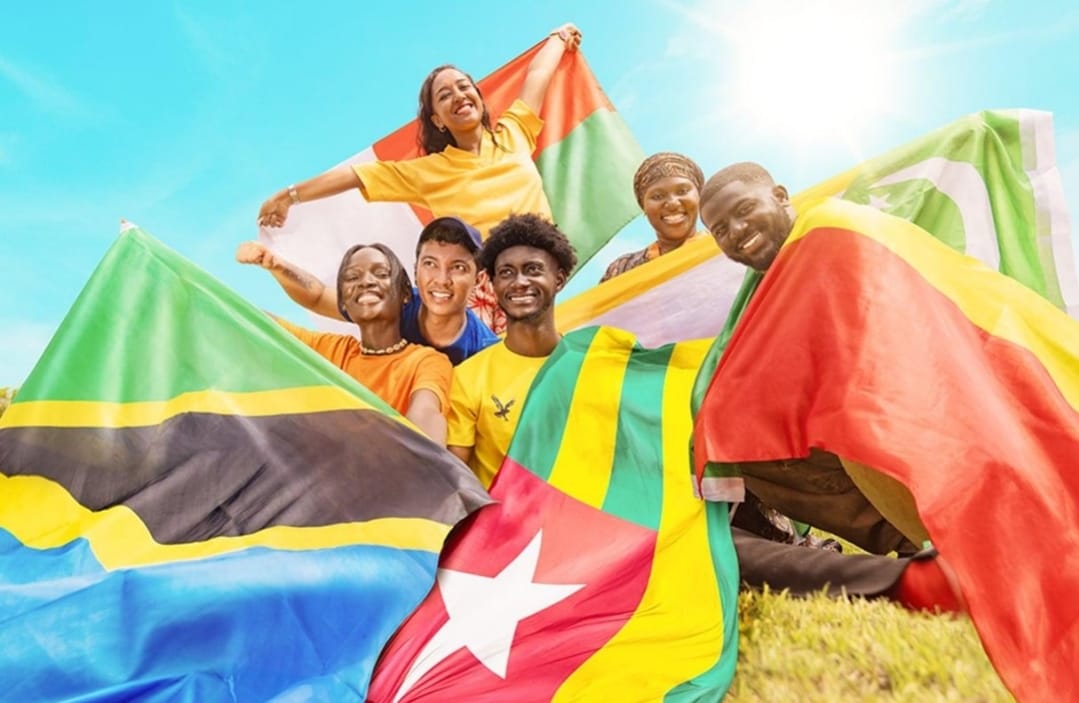 Can Africa Turn Its Population Boom into Prosperity?
The Story We Must Tell for Africa’s Next Chapter
Imagine a young African student walking into a university lecture hall. Around her are hundreds of other young people, each carrying a dream to become a doctor, engineer, teacher, entrepreneur or leader.
The room is full of energy and ambition.
Yet one question quietly lingers…
Will there be enough opportunities for them when they graduate?
This question captures one of the greatest challenges and perhaps one of the greatest opportunities facing Africa today.This question is becoming increasingly important as Africa experiences one of the most significant demographic shifts in the world.
According to the United Nations Department of Economic and Social Affairs (UNDESA), Africa’s population is projected to reach approximately 2.5 billion by 2050, making it the fastest-growing region in the world. By 2100, Africa is expected to account for a much larger share of the global population, with 12 of the world’s 25 most populous countries projected to be African.
These are not merely statistics. They represent millions of people, workers, consumers, entrepreneurs and future leaders.
For decades, Africa’s population growth has often been presented as a problem. More people are seen as greater pressure on schools, hospitals, housing, food, jobs and other public services. These concerns are real. But perhaps we have been asking the wrong question.
The question should not simply be, “How will Africa cope with so many people?” It should also be, “How can Africa organise, educate and empower this population so that it becomes a source of prosperity?”
A growing population can create deeper markets, a larger labour force, greater entrepreneurship and the human capital needed for agricultural and industrial transformation. Population growth does not necessarily have to be a burden to manage; it can become a foundation for economic take-off.
But population growth does not automatically create prosperity.
The demographic clock is not ticking at the same speed everywhere. While Africa remains young and rapidly growing, Europe is ageing and several European countries are experiencing population decline. China is also facing an ageing and shrinking population after decades of rapid growth.
This gives Africa a unique opportunity. As other regions begin to confront shrinking workforces, Africa’s working-age population is expanding.
But there is an important distinction we must not overlook: a large population is not the same as a productive population.
A young population without adequate education, healthcare, skills and employment can deepen unemployment and poverty. A young population equipped with the right opportunities can become an extraordinary engine of economic growth. This is the potential of the demographic dividend.
The dividend, however, will not happen automatically. Africa needs sustained investment in education, healthcare, energy, infrastructure, agriculture, technology and productive employment. It needs industries capable of absorbing its growing workforce and institutions that reward productivity and innovation.
Africa’s demographic transformation is therefore not only an economic issue. It is a leadership challenge.
If we know that millions of young people will enter the labour market every year, we cannot wait until they graduate before asking where the jobs will come from. If our cities are growing rapidly, we must plan for them now. If millions of children will enter our schools, we must ensure that education equips them not only to seek employment, but to create value.
Good leadership anticipates the future and prepares for it before the crisis arrives.
But the responsibility does not rest with leaders alone. The African youth must also rise to the moment. If Africa’s population is going to become an engine of prosperity, then we must ask ourselves what we are bringing to the table. Are we preparing ourselves for the opportunities that lie ahead? Are we acquiring the skills, creating the ideas and developing the solutions that Africa needs? We cannot simply wait for governments to create opportunities for us while we remain spectators of our own future. We must be willing to learn, to build, to innovate and to take responsibility.Africa’s growing population gives us the numbers; what we do with those numbers will determine whether they become our greatest strength or our greatest challenge
Africa’s population boom therefore presents a choice.
One path leads to unemployment, poverty, pressure on public services and inequality. The other leads to a continent where its young population becomes its greatest productive assetcreating businesses, advancing technology, transforming agriculture and contributing to the global economy.
The difference between these futures will not be determined by population numbers alone.
It will be determined by the choices we make today.
The scale is now in place. The clock is ticking
The question is whether Africa will have the courage and foresight to invest in its people before the demographic opportunity becomes a demographic burden. Whether Africa’s population surge becomes a driver of transformation or another missed turning point will depend on the decisions made now
Perhaps the story Africa needs to tell about its population boom is not a story of too many people and too few resources.
It is a story of potential.
A story about whether we can transform millions of young lives into millions of opportunities.
The task before us is to turn population into productivity, youth into human capital and potential into prosperity
Africa’s greatest resource may not be what lies beneath its soil, but the people who stand upon it. The question is whether we will be ready to invest in them.
Written by fellow Yaa Nyarko Frimpong